




Natural grass, artificial surfaces, and indoor football environments place different demands on a football, so looking beyond appearance and price is important. So if you are comparing the best soccer balls for turf, start by considering construction, surface durability, control, and how consistently the ball maintains its shape. For players who move between grass and artificial surfaces, a versatile hybrid ball can also be a practical choice.
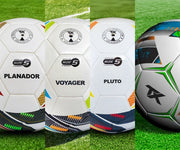
TX Football offers a range of match, training, hybrid, and junior footballs, giving players and clubs several options for different playing needs. Its range includes the Voyager+, Hikari, Climate Football, Planador, and Pluto, among others.
What Makes a Soccer Ball Suitable for Different Surfaces?
The playing surface affects how a ball behaves and how much wear it may experience. Natural grass generally provides a softer playing environment, while artificial grass can create a different type of contact between the ball and the ground.
For artificial grass football, durability and consistent handling are particularly useful considerations. A ball with a strong outer casing and reliable shape retention can be a sensible choice for regular training and recreational sessions.
Best Soccer Balls for Turf: What Should You Look For?
When searching for the best soccer balls for turf, pay close attention to durability and consistency. Artificial surfaces see heavy use, especially by clubs, schools, and training groups, so the football needs to cope with regular sessions.
A textured PU outer surface can be useful because it provides a controlled contact point while contributing to the ball's overall construction. The Voyager+, for example, uses a premium solid textured PU casing with a laminated support layer.
Its hybrid construction combines traditional and modern football construction approaches, while its EVA foam air cushion and latex reinforcement are designed to support rebound, shape retention, and durability.
Voyager+ Hybrid Soccer Ball
The Voyager+ stands out for its hybrid construction. Its 1.2mm laminated upper casing is supported by a nonwoven backing fibre, while a 3.0mm modified EVA foam air cushion contributes to rebound and playability. High-ammonia latex reinforcement adds another layer of durability.
These construction details matter when you are looking for a ball that can handle repeated training sessions without focusing solely on its visual design.
The Shepparton Cup 2025 ball is another Voyager+ hybrid variant. It features DualTec 20-panel construction, a textured surface, 6mm padding, and a design intended to provide consistent roundness and weight.
Choosing a Ball for Natural Grass
Grass football can involve everything from casual practice to competitive match play, so the best option depends on your level and purpose.
For players looking for a more premium match-oriented option, TX Football's Hikari provides several performance-focused features. It uses a 1.4mm Japanese PU texture, 8.5mm total cushioning, and a gel-infused core combined with multi-layered foam. The design is also intended to provide flight stability and a consistent feel in different conditions.
The Climate Football is another premium option worth considering. It uses an upper casing made with recycled PET bottles, along with a water-resistant PU surface and 1.2mm microfiber backing support. Its construction includes a 4mm modified foam air cushion and reinforced layers designed for durability.
What About Indoor Football?
Indoor football has its own playing environment, so players should consider the requirements of their particular venue and competition before buying.
If you regularly move between indoor football and outdoor sessions, versatility becomes more important. A hybrid football may provide a practical option for players who want one ball for multiple training environments, although competition organisers may have specific requirements for official games.
The Voyager+ is one option to consider when versatility is a priority. Its hybrid construction was developed by combining traditional and contemporary football construction methods, with emphasis on durability, shape retention, flight, and control.
Match Ball or Training Ball: Which One Do You Need?
Not every player needs a premium match ball for everyday training. In fact, clubs can benefit from keeping different footballs for different purposes.
A training football should be able to handle repeated use while providing dependable handling. TX Football's Planador, for example, is positioned as a match-training football and uses thermal bonding, soft PU material, and a PV reinforcement layer.
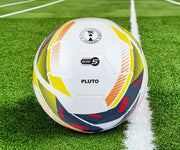
For younger players, size is another important consideration. TX Football offers the Pluto junior football in sizes 3, 4, and 5, making it suitable for different age groups and playing requirements.
How to Choose the Right Football for You
Before buying, consider these five points:
-
Playing surface
Think about where you play most often. If artificial grass is your regular surface, prioritise durable construction and consistent handling.
-
Playing purpose
Decide if the ball is mainly for training, matches, junior development, or casual play. A premium match football may not be necessary for every training session.
-
Ball size
Check the required size before ordering. TX Football offers options across different sizes, including junior and full-size footballs.
-
Construction
Look at the casing, cushioning, reinforcement, and bonding or stitching method. These details can tell you much more about a football than its appearance.
-
Sustainability
For environmentally conscious buyers, the Climate Football provides an option that directly incorporates recycled PET bottles into its construction.
Find the Right Football for Your Game
The right football depends on more than where you play. Your surface, playing level, training frequency, preferred feel, and purpose should all influence the decision. For artificial grass football, durable construction and consistent handling are useful priorities, while players involved in indoor football should also check their venue's specific requirements.
TX Football's range gives players and clubs several choices, from the hybrid Voyager+ to premium options such as Hikari and Climate, alongside training and junior footballs. With its focus on product development, ethical manufacturing, and sustainability, TX Football offers options for players who want their equipment to support both their game and their values.